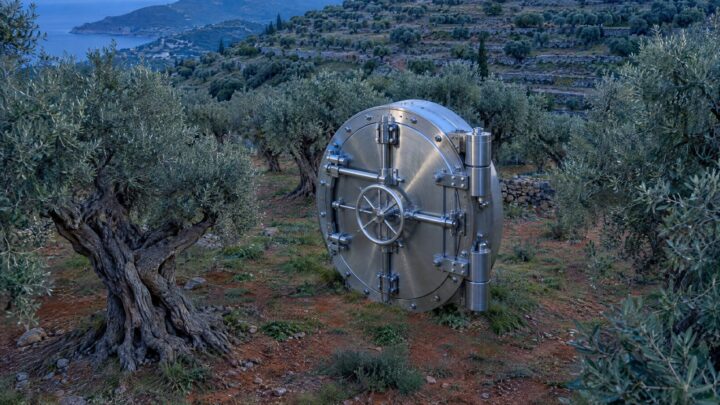

The room, not the system
When you play back a recording, you are hearing the room, not the system.
The first listen is just not the result.
For decades, records were mastered ever louder, because louder sounds better on a first listen. As expected, the dynamics and what gives true depth to sound were crushed. Broadcast loudness normalisation (EBU R 128) changed the rule, measuring loudness as people perceive it across the whole programme and not by its peaks. Nowadays, the major streaming platforms normalise loudness too, and most of the reward for being loud has disappeared.
Outside the studio and for those serious about audio (I will draw the parallel shortly) the hard truth of physics only showed once someone made a direct comparison with a dynamic, high-resolution master and a studio production of real fidelity. Measurements and charts can show that difference clearly but whether you actually perceive it depends on how the sound is reproduced. For those who know, what reaches your ears is the room's response to the system rather than the system itself. So, the environment is key, and so is an audition in a well-treated room.
The same system in a different space can end up performing at the opposite end of the chart.
There are remedies, and they are based on mathematics. When the environment is not ideal, a wrong choice or a wrong placement, you start there, with the basics. Then you measure the room's response and tune the system so its signals adjust to what you measured. Spend enough time and effort on both ends and the result can surprise you. Then play the two files again, and the difference that was arguable becomes obvious and digitally measurable.
Loud does win on the first listen, I will give it that. But the first listen is just not the result, and what sounds good does not mean that there is no "better" or "much better".
The busy dashboard
Transposing this to a business is more revealing than it looks. The dependencies between functions, processes and their outcomes are the system a business runs on. That system sends signals into an environment that responds and this can be the market outside and the people inside. In isolation, a busy dashboard, a full meeting schedule or a rich pipeline report can look good because they are loud. The question is how they perform together, and in the environment they were meant for.
Activity metrics are still useful, even before a full measurement system exists, but they just lack the depth that measuring the response adds, and without that depth a decision can only be judged in hindsight.
A busy team, a silent market
About a year ago, I was talking with an industrial manufacturer of fluid-handling equipment about their growth strategy. They had a sales team that looked busy by every measure on paper. Many prospects contacted each month, fair follow-up cadence and full activity reports. The established lines kept moving the sales bar, up to a ceiling everybody already knew, but the new lines did not do well.
On a deeper dive, I found out that the management had asked the team to actively prioritise and promote a new product mix that entailed pilot products sourced by third-party suppliers, markedly more expensive (40%), with the promise of higher efficiency and lower total cost of ownership. What nobody had measured, and that was a serious misstep, was how the market would respond because their past experience led them to believe that the same buyers who bought their main lines would buy the new ones and they did not.
The signal had changed and the room had not. These products were meant for higher-end, more mission-critical installations, and the firm's existing clients, who build their solutions on its products, were not doing that kind of work. To get there they would have needed certifications, better engineers and other tools, so the new line had to aim at different clients, already working on such projects. The team was selling luxury cars to people on basic salaries, from a list of generic addresses rather than the people who decide.
We met this firm as a prospect but the work never went ahead so there is no result to report, only the method we proposed. Measure before deciding: the current lines against the customers already proven to buy them along with the new lines against those same customers, side by side. Where the response differs, build a separate customer profile for the new products, and measure again. In studio and sound response terms, they had tuned the system for a room it was not playing in. You start by measuring the room, and if it is the wrong room, you change it.
Zoom in, zoom out
You can zoom in and out (environment levels) and the same mechanism and principles still apply. A leader's actions and communication are the signal, the employees are the room that receives it and responds, and so on down the line.
What to measure on Monday
So, for any business objective, start by identifying the source and the signals it sends. Then measure its output in the environment you expected it to work in, the market or the people in it, no difference.
Coming Monday, I have a proposal for you. Take the performance and KPI reports from your last management meeting, and next to each write the signal it measures (what the firm did) and the response it shows (what the market or the people did back).
| Report | 1. SignalWhat the firm did | 2. ResponseWhat the market or people did back |
|---|---|---|
| Weekly sales activity | Calls made | Replies from decision-makers |
| Proposal pipeline | Proposals sent | Second meetings booked |
| Ads dashboard | Clicks bought | Empty: measuring loudness |
| Website report | Traffic driven to the site |
Any report with an empty second column is measuring loudness.
To get the results you expect, build a method that measures the response to your actions and lets you fine-tune the signal.
What needs to be measured?